
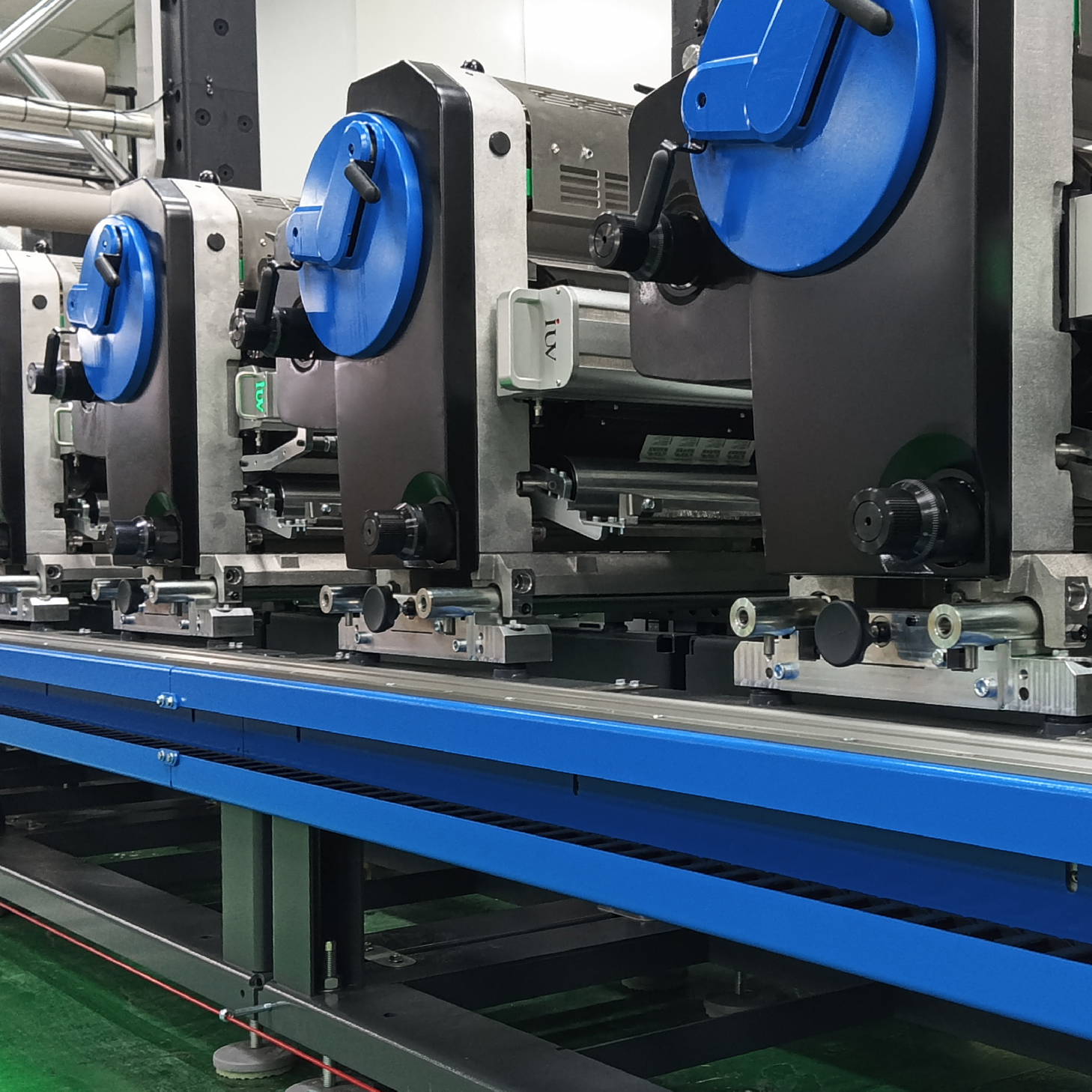
In today’s competitive print market, maximizing press efficiency is paramount. Every minute saved, every kilowatt-hour reduced, directly impacts the bottom line. For printers working with narrow web, flexographic, offset, and label applications, the choice of curing technology plays a significant role in achieving these goals. Traditional UV curing systems, while effective, often come with substantial energy demands and maintenance overhead. The advent of LED UV systems designed for low power consumption offers a compelling solution, promising enhanced productivity and a more sustainable operation.
The shift towards energy-efficient LED UV technology is not merely an environmental consideration; it’s a strategic business decision. These advanced systems are engineered to deliver high-quality curing results while consuming a fraction of the power required by conventional mercury lamps. This reduction in energy consumption translates directly into lower operating costs, a key advantage for businesses striving for greater profitability. Furthermore, the enhanced performance characteristics of modern LED UV systems address many of the long-standing challenges faced in high-speed printing environments.
Understanding the Benefits of Low-Power LED UV
Low-power LED UV systems offer a multifaceted advantage for the modern print shop. Their primary benefit lies in their dramatically reduced energy footprint. Unlike mercury lamps, which require significant warm-up and cool-down periods and often operate at peak power even when not actively curing, LEDs are instant-on, instant-off. This means energy is only consumed when curing is actually happening. This on-demand operation, coupled with the inherent efficiency of solid-state lighting, leads to substantial energy savings. For a busy narrow web press running multiple jobs daily, this can amount to significant cost reductions over time.
Beyond energy savings, LED UV systems boast a longer operational lifespan. The components are robust and designed for extended use, minimizing the need for frequent lamp replacements. This reduces downtime associated with maintenance and lowers the recurring cost of consumables. The consistent, uniform light output from LEDs also contributes to improved print quality. Unlike mercury lamps, which can degrade over time and produce uneven curing, LEDs maintain their spectral output, ensuring reliable and repeatable results job after job. This consistency is crucial for label printing, where precise color registration and finish are critical.
Impact on Flexographic and Narrow Web Printing
In the realm of flexographic and narrow web printing, where speed and precision are essential, LED UV curing brings distinct advantages. The instant curing capability of LEDs allows presses to run at higher speeds without compromising ink adhesion or durability. This is particularly beneficial for high-volume label production and packaging applications. With traditional UV, printers often had to balance speed with the risk of overheating the substrate, a concern minimized by the cool-running nature of LEDs. This allows for the printing on a wider range of heat-sensitive materials, expanding application possibilities.
The compact design of LED UV heads also offers greater flexibility in press integration. They can be easily retrofitted onto existing narrow web presses, providing a cost-effective upgrade path without requiring extensive modifications. The reduced heat generated by LED systems also contributes to a more stable printing environment. This helps prevent issues like ink drying prematurely on the rollers or plates, leading to smoother production runs and fewer waste sheets. For flexo printers focused on high-quality graphics and functional coatings, the reliable curing provided by LEDs ensures a consistent, high-gloss finish.
Advantages in Offset and Sheet-Fed Applications
While often associated with narrow web, LED UV curing is also making significant inroads in offset and sheet-fed printing. In these sectors, the ability to achieve instant drying on a wide array of substrates is highly valuable. For commercial printers producing brochures, marketing collateral, and other high-end printed materials, LED UV allows for immediate handling and finishing of printed sheets. This eliminates the need for long drying times or anti-offset powders, which can interfere with subsequent processes like coating or lamination.
The quality of the cured ink is also a critical factor. LED UV systems provide excellent scuff resistance and chemical resistance, ensuring the longevity and durability of the printed product. This is especially important for applications requiring robust finishes, such as point-of-purchase displays or durable signage. The precise control over the UV spectrum emitted by LEDs also allows for optimized curing of specific ink formulations, leading to superior adhesion and gloss across various ink types, including specialized metallic and spot color effects.
Addressing Power Consumption Myths
A common misconception is that higher power output equates to better curing. While powerful UV lamps can cure inks quickly, they do so with substantial energy expenditure. Low-power LED UV systems, however, achieve excellent curing through precisely targeted wavelengths and optimized intensity. The energy efficiency comes from the LEDs themselves, which convert a much higher percentage of electrical energy into UV light compared to mercury lamps. This means that even at lower power ratings, they can achieve the necessary energy density to cure inks effectively, especially when optimized for specific UV-curable formulations.
The “low power consumption” aspect refers to the system’s overall energy draw during operation. This is a direct result of the advanced semiconductor technology used in LEDs. They generate less wasted heat, require no warm-up time, and can be precisely controlled. This intelligent design translates into a more economical and environmentally friendly curing solution without compromising on performance, a crucial point for printers looking to reduce their operational carbon footprint and energy bills.
The Future of UV Curing in Printing
The trend towards low-power LED UV systems is set to continue its upward trajectory. As environmental regulations become stricter and energy costs remain a significant concern, printers will increasingly seek out technologies that offer both performance and sustainability. The ongoing advancements in LED technology promise even greater efficiency, longer lifespans, and more powerful curing capabilities. This will further blur the lines between traditional and modern curing methods, making LED UV the de facto standard for many printing applications.
For any print shop considering an upgrade or a new press investment, evaluating LED UV systems with a focus on low power consumption is a wise move. It’s an investment that pays dividends through reduced operating costs, improved print quality, enhanced application flexibility, and a more sustainable business model. Embracing this technology is not just about staying current; it’s about future-proofing your operation and gaining a competitive edge in an evolving industry.